Mule Deer: A Breakdown of the Desert Deer
Desert deer are a subspecies of mule deer adapted to survive in the arid environments of the southwestern United States and northern Mexico. They thrive in desert plains, foothills, and shrublands where water and vegetation are limited.
Key facts about desert mule deer:
- Distinctive appearance: Known for large mule-like ears, gray-to-tan seasonal coats, black-tipped white tails, and forked antlers in males.
- Heat adaptations: Most active at dawn and dusk and seek shade or higher elevations to avoid extreme desert temperatures.
- Diet: Herbivores that browse shrubs, grasses, sagebrush, bitterbrush, cactus, and other desert plants.
- Seasonal movement: Migrate between elevations to follow cooler temperatures and fresh vegetation.
- Role in ecosystems: Help shape plant communities and serve as prey for predators like coyotes and mountain lions.
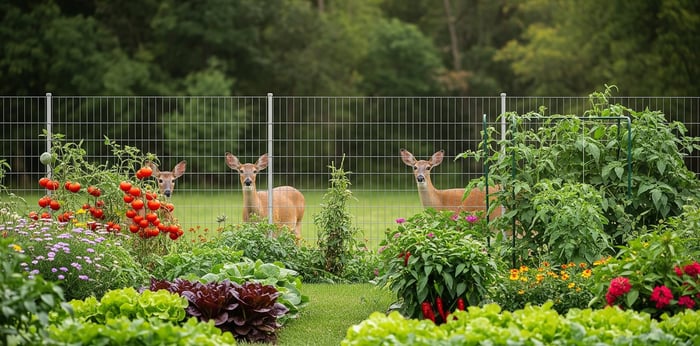
- Human conflict: During droughts, mule deer often forage in residential gardens and landscaping for food and moisture.
These adaptations allow desert mule deer to survive in some of North America’s harshest landscapes.
The desert mule deer is a subspecies of mule deer that has adapted to live in dry climates. Sometimes called the burro mule deer, this species lives throughout the southwestern United States, including southern California and Nevada, as well as throughout Arizona and New Mexico. They thrive in arid environments, including desert plains, foothills, and shrublands.
Like other mule deer, desert deer play an important ecological role in desert environments. They eat a variety of plants and shrubs and, in turn, are preyed upon by hunting mammals such as coyotes and mountain lions, placing them firmly in the middle of the food chain. This subspecies helps to shape plant life in desert environments while also supporting the needs of other animals in their ecosystem.
However, just like any other deer species, mule deer can become dangerous to your property and garden. To properly protect your space, it’s best to understand the mule deer, their motivations, and how you can humanely ward these desert deer away.
Physical Characteristics of Mule Deer
Several physical characteristics differentiate mule deer from other deer species. Some of their most notable characteristics include:
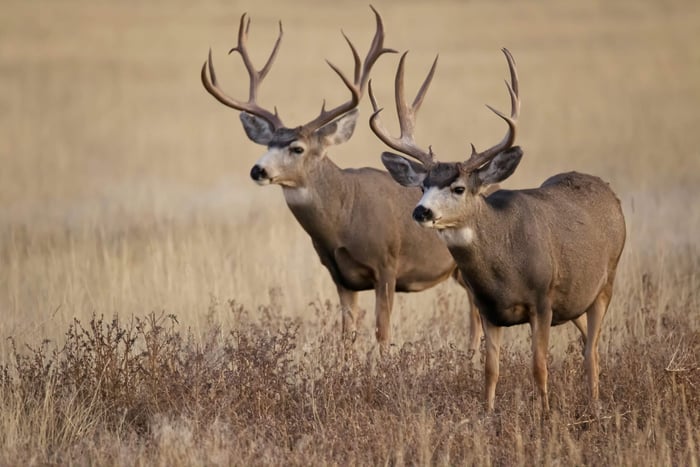
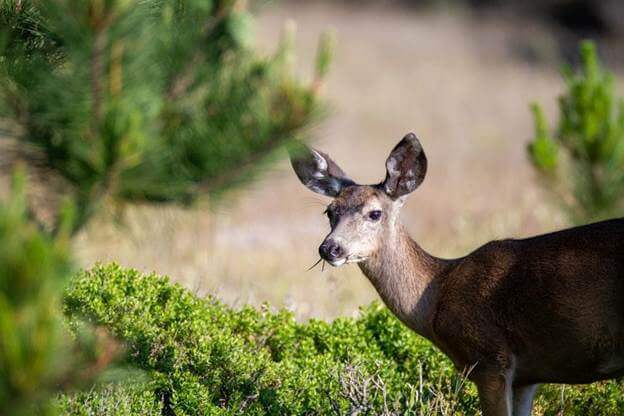
Distinctive, large ears: The mule deer’s ears look similar to those of a mule and are the inspiration for this species’ name. The ears are more pointed at the ends than those of other deer species.
- Coat coloration: The coat of the mule deer changes colors depending on the season. Their coats are more tan in the summer, and become more gray in the winter.
- Tail color: Mule deer have a white tail with a black tip. In contrast, the white-tailed deer’s tail is, as the name suggests, entirely white.
- Body size and weight: Male mule deer (called bucks) can weigh as much as 300 pounds, while females (called does) weigh closer to 100 pounds. On average, mule deer are larger and weigh more than white-tailed deer.
- Antler growth cycles: Like other hoofed animals, mule deer bucks grow antlers. Bucks have bifurcated or forked antlers, compared to other deer species that have antlers with multiple points stemming from a single branch. Mule deer shed their antlers in the fall and regrow them each spring.
Many of these physical adaptations are vital to the mule deer’s ability to survive in harsh, arid climates. Their large, iconic ears provide more than a name — they help with thermoregulation, allowing mule deer to stay cool even on hot days. Meanwhile, their coat coloration allows them to camouflage in desert landscapes.
Behavioral Patterns of Mule Deer in the Desert
The mule deer’s behaviors have also evolved to support life in the desert. They’re most active at dawn and dusk, allowing them to avoid searching for food and resources in the peak heat of the day. They may also seek out shaded shelter to stay cool during especially extreme temperatures.
Beyond this, mule deer are a migratory species. In the springtime, they’ll move to higher-elevation areas as winter snow melts off. Not only does this allow them to avoid hotter temperatures at lower elevations, but it also lets them take advantage of fresh vegetation to eat. Come fall, mule deer do the opposite, moving to warmer, lower elevations to continue sustaining their diet and stay out of harsh winter weather.
In times of drought, desert-dwelling mule deer may also move closer to residential areas. When the climate becomes unexpectedly dry and the water content in vegetation drops below a certain level, they will seek water and food outside their usual range, even if that means being closer to humans.
What Do Mule Deer Eat in the Desert?
Mule deer are herbivores and eat a varied diet composed of many different plants. They primarily eat flowering plants, grasses, leaves on woody plants, and berries and fruit. Desert-dwelling mule deer may opt for shrubs (such as sagebrush or bitterbrush) and even certain cactus and succulents.
What deer like to eat can shift with the seasons. A few other factors, such as plant health and soil quality, can affect their dietary choices. Mule deer have smaller stomachs than other animals of similar size. This means they tend to be pickier eaters and only choose the highest-quality food available to them.
Limited rainfall and increasing droughts in the western U.S. can affect plant availability in desert ecosystems. Drought conditions can push deer toward other food sources found in residential gardens, including flowers and other ornamental plants, tree bark and young saplings, and fruit from your vegetable garden.
Why Mule Deer Are Destructive to Gardens and Landscaping
Though it may seem innocuous for a deer to visit your garden for a meal, mule deer can actually cause significant damage to your landscaping. As deer “browse” your yard, they may eat and harm your flowers, shrubs, trees, and vegetables. Beyond this, they may rub their antlers on young trees, both to alleviate itching and to mark their territory. They could also trample plants in your yard by simply walking over them.
All of these actions can set back your gardening efforts and planning, which can be as harmful to your wallet as it is to the plants in your yard. This can be particularly frustrating if you’re working to transform your landscaping or have been putting special effort into creating a drought-tolerant garden. The very reason you want to create a drought-tolerant garden may be the same reason why mule deer are becoming interested in it — and if your area continues to experience drought conditions, this may turn into a longer-term challenge you have to manage.
Are Mule Deer Dangerous?
Though they can damage gardens, mule deer generally aren’t dangerous to humans. That said, they can become aggressive during certain times of the year. Bucks can be territorial during rutting season, which occurs in the fall as they seek out mates. Meanwhile, does can be territorial in the spring, when they give birth to new fawns.
Increased human interaction in suburban and urban environments does open the potential for dangerous situations with mule deer. This includes issues like charging at people and attacking pets. In addition, more frequent conflict between people and deer can result in a higher likelihood of property damage — such as to your vehicle, home, or garden — particularly if a deer runs into something after being startled.
Always remember: mule deer are wild animals. Even if they seem acclimated to being near humans, they can still act unpredictably and suddenly become aggressive. It’s important to give deer plenty of space if you see them, as well as to take preventative measures to discourage them from visiting your home and yard to reduce potential contact.
Protect Your Garden from Desert Deer
The best way to live in harmony with mule deer is to decrease the likelihood of close encounters with them. Doing so keeps you, your property, and wildlife safe. This is especially important if you’re an eco-conscious or sustainable gardener, as you need to do what you can to ensure your activities are positive for the local ecosystem and climate as a whole.
Generally, long-term, proactive prevention strategies are more effective than reactive or short-term solutions. Here’s what you need to know to keep your garden safe from desert deer.
Why Repellents and DIY Solutions Often Fail
The first thing you may consider is a mule deer repellent. These repellents can be sprayed or applied throughout the relevant parts of your yard. They have an unpleasant odor or taste (or both) that deters mule deer from eating plants in your garden, or even approaching it in the first place.
These repellents may be effective at first. However, over time, mule deer may become accustomed to the scents, recognizing that no danger is present despite the unpleasantness. They also require continual reapplication, as scents and tastes fade over time under harsh sun, dry conditions, wind, and occasional moisture. That’s why it’s best to use something like a physical barrier instead — not only is it less maintenance for you, but it’s also more effective.
The Importance of Physical Barriers
Physical barriers, such as plastic deer fences, protect your property by preventing deer from accessing it in the first place. Fences can deter deer from going after potential food sources at any time, but can be even more useful during droughts or seasonal migrations.
A barrier of some sort may require a larger upfront investment than a spray or repellent. However, investing in a wildlife barrier is likely to pay off in the long run. It’s a one-time purchase that you can get use out of for seasons to come, and you can save time since you won’t have to continually go out to purchase and then spray a repellent around your yard. It also protects the money and time you’ve already spent on your landscaping.
Consider a metal deer fence for added durability in extreme desert temperatures. No matter what kind of material you choose for your fence, make sure the barrier exceeds the height to which deer can jump – at least 8 feet –, so they can’t hop the fence to get to your garden.
It’s also important to purchase a deer fence from a reputable and trustworthy vendor. Luckily, DeerBusters’ fencing solutions are a reliable, tried-and-true method to protect drought-resistant gardens from desert-dwelling mule deer. Get in touch with one of our agents for a quote today!
FAQs
What Is the Difference Between Mule Deer and Other Desert Deer?
Mule deer are the primary species referred to as “desert deer” in the western United States. They are known for their large mule-like ears, black-tipped tail, and bounding gait known as “stotting.” Desert-dwelling mule deer are specifically adapted to arid climates, with behaviors and feeding patterns suited to sparse vegetation and extreme heat.
What Do Mule Deer Eat Most Often in Dry Climates?
In dry climates, mule deer primarily browse on shrubs, woody plants, and native desert vegetation such as sagebrush, bitterbrush, and other drought-tolerant plants. During periods of limited rainfall, they may also consume cactus, succulents, and tree bark to meet their moisture and nutritional needs. When natural forage becomes scarce, mule deer frequently turn to irrigated residential landscaping and vegetable gardens.
What Do Mule Deer Eat in the Desert During a Drought?
During drought conditions, mule deer expand their diet beyond native forage and seek out high-moisture, nutrient-dense plants. This often includes ornamental shrubs, young trees, garden vegetables, and even drought-resistant landscaping plants. Irrigated yards become particularly attractive because they provide reliable food sources when surrounding desert vegetation declines.
Are Mule Deer Dangerous to Humans?
Mule deer are generally not aggressive toward humans and prefer to avoid confrontation. However, bucks can become more territorial during the rut (breeding season), and any deer may react defensively if cornered or startled. The most significant risks associated with mule deer are vehicle collisions and property damage rather than direct attacks.
How Can I Protect My Garden From Mule Deer?
DeerBusters recommends protecting your garden from mule deer by installing a properly sized physical barrier, such as deer fencing that accounts for their jumping ability. Mule deer can clear heights of six feet or more, so fencing should be tall, secure, and durable enough for desert conditions. While repellents and deterrents may offer temporary relief, long-term protection requires a consistent, structural solution that prevents deer from accessing plants in the first place.