The Great Barrier Debate: Why More Americans Want Privacy and Boundaries in Their Backyard
Outdoor living has become a defining feature of American home life. Demand for outdoor living spaces has steadily increased in recent years, as homeowners prioritize patios, gardens, and private backyard areas that function as extensions of the home. As these spaces take on a bigger role in everyday life — from quiet relaxation to entertaining guests — privacy and security concerns naturally follow. At the same time, rising costs and shifting neighborhood dynamics are influencing how homeowners think about protecting and defining the spaces just outside their doors.
To better understand how Americans balance privacy, neighborly relationships, and security, DeerBusters surveyed 1,000 U.S. adults who have access to outdoor space at home. The findings explore how comfortable people feel around their neighbors, how concerns about being watched influence behavior, and how factors like inflation shape decisions about privacy features. The results reveal how Americans are redefining the role of their outdoor spaces, and what they’re willing to do to protect them.
Key Takeaways
70% say the outdoor space around their home is more important than it was two years ago — including 43% who say it is much more important, and climbing to 51% of Gen Z.
44% say they worry neighbors may be watching them at least sometimes, and 20% report a past disagreement related to property lines, fencing, or yard boundaries.
Well-maintained lawns (77%) and friendly decor (72%) are the strongest signals of a welcoming home, while political signage flips the script, with 34% saying it makes a home feel less welcoming.
54% say privacy is essential to relaxing quietly outdoors when at home, while 42% want privacy when hosting gatherings, and 41% want privacy when having personal conversations outside.
55% say fencing helps them feel safer and more secure at home, with 50% citing installing fencing for more privacy and 47% citing protecting children or pets.
47% say tall, solid privacy fences provide the strongest sense of privacy and security, far exceeding natural barriers like hedges or trees (10%).
54% say inflation and economic uncertainty have made them more concerned about protecting their home or outdoor space, rising to 68% among Gen Z.
Backyard Space Is Becoming a Bigger Priority
In a time where over 22 million people are working from home, Americans are expanding their definition of home. Front and back yards provide residents with a chance to get outdoors without leaving their property, and this is becoming a higher priority for many people. House hunters and renters alike are looking for open floor plans and closed-off backyards.
The majority (70%) of respondents said that the outdoor space around their home is more important than it was two years ago, 43% of whom said it was much more important. Nearly a third (27%) said their yard was equally as important to them as two years ago, marking a share of Americans who have always been passionate about getting outside.
Despite being the generation to grow up entirely online, Gen Z cared more about their outdoor space than any other generation. Half of Zoomers (51%) said that outdoor space was much more important to them now than two years ago, but only 48% of millennials, 34% of Gen X, and 31% of boomers felt the same. The youngest generation is looking to escape their screens — or at least look at them while basking under the sun.
But sheer space isn’t all that Americans are looking for. Having a secluded yard is a top priority for a growing share of people. The majority (87%) of respondents said that without fencing or other natural barriers between their yard and their neighbors’, they would feel exposed. Of those, 33% said they would feel extremely exposed without any kind of separation. When people have a yard to themselves, they use it. In fact, 49% of respondents said they spend more time outdoors because their yard feels secluded and private. In an era of digital burnout and screentime overload, more and more Americans are looking for calming spaces to unplug.
What Americans Are Hiding In Their Backyards
What’s motivating people to prioritize outdoor privacy? For many, it’s not that they’re doing anything special; they just want to live their lives without being watched. Whether they’re having fun in the sun or just resting in the shade, here’s what Americans want to use their private yards for.
Americans want to keep their mundane, everyday moments away from prying eyes: 54% want privacy when relaxing on their own, and 42% want privacy while hosting family or friends. Another 41% want to know that their personal conversations will stay personal, even if they’re outdoors. These people represent Americans who want their outdoor spaces to be as private as their indoor spaces so that they can utilize them the same way. Other moments residents wanted outdoor privacy for included:
Exercising outside (34%)
Letting pets roam freely (33%)
Letting children play outside (28%)
Playing music outdoors (28%)
Swimming or using a hot tub (23%)
Only 14% were willing to do all of the above in plain sight, saying that they did not mind if their neighbors saw them in their yards. But the consistent desire for privacy during everyday activities shows that most Americans would spend more time in their yards if they knew they wouldn’t be seen. The right protection can lead to more time outdoors, which, for many, can lead to improved mental health and lowered cortisol.
How People Are Protecting Their Privacy
The ways people choose to protect their homes are as varied as their reasons for doing so. While some invest in attractive fencing around their homes, others utilize more natural solutions. Among those who go the fencing route, the benefits can span far beyond just privacy.
More than half (55%) of respondents were open to putting up new fencing to feel safer and more secure at home. Half (50%) said that fencing creates more privacy in their yard, with an additional 47% saying tall, solid privacy fences gave them the best sense of security. Reducing visibility is the primary way that Americans protect their privacy and safety.
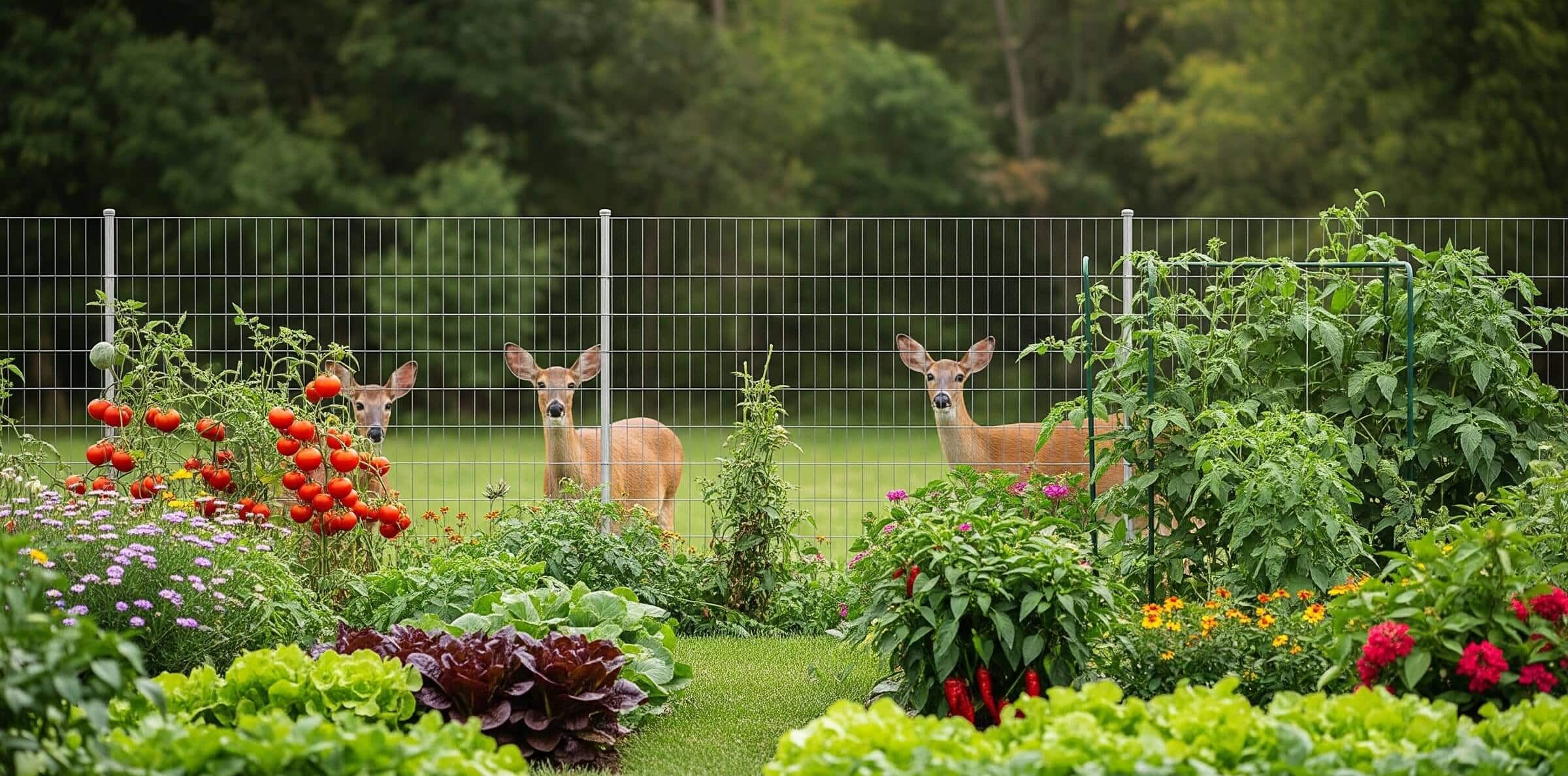
But the benefits of high-quality fencing go beyond not being seen. Nearly half (47%) said that fencing helps protect children or pets while they are outside, while 24% said they help keep wildlife out of their yard, and 20% said it protects their landscaping or gardening projects. Another 29% said that fences clearly define property boundaries, with 16% saying they can reduce neighborly tension over property lines.
Good fencing has aesthetic value, as well: 21% said the right fence can increase property value, and 16% said it increases curb appeal. A minority of respondents preferred natural barriers, like hedges or tall trees, with 10% noting that natural barriers were the most secure, and 19% said that a combination of fencing and landscaping was most effective. No matter their personal preference, though, residents wanted above all else to go about their lives unobserved–even when outside of the home.
More Privacy Can Change Your Perspective (and Your Neighbor’s)
While a privacy fence can ensure you read your favorite books out of sight, it could also draw a side-eye from your neighbors. Public perceptions of privacy fencing and landscaping can influence whether or not some people upgrade their outdoor spaces. Here’s what people really think about residential fencing.
Fencing changes the way people think about houses — largely for the better. Over a third (38%) of respondents said that tall and fully enclosed fences make a home feel peaceful and private, and another 24% said these fences make a house feel safer. Homes with strong privacy solutions rarely draw judgment: only 7% said that fencing can make a home feel unwelcoming, and only 5% said it makes them believe the resident is hiding something. Socially, there are rarely any drawbacks to a robust fence setup.
People often look beyond fencing when drawing conclusions about a neighbor’s home, though. Over three-quarters (77%) look to the quality of their neighbor’s lawn, saying that a well-kept yard makes the home feel more welcoming. A slightly smaller share (72%) said that seasonal decorations have the same effect, meaning your jaunty floral wreath may be giving your neighbors a good impression.
Interestingly, 44% of respondents said that a lack of fencing did not change the way they viewed a neighbor’s home, but only 39% said the same about tall privacy fencing. Having open yards seems to draw neutral to positive reactions, but tall fencing creates more polarized opinions. Intentionally blocking all views of the home, or installing fencing that feels out of place in the neighborhood, can all become topics of debate at the next HOA meeting.
Another 45% said they felt neutral toward political signs in their neighbors’ yards, showing that people may not be as divided as the headlines say. This was lowest among Gen Z, with 30% of Zoomers feeling neutral toward political signage, and 33% of the generation saying it made them feel unwelcome. Gen X showed mixed reactions to political signs, with 53% reporting neutral reactions and 38% saying the signs made them feel unwelcome. While only 10% of Gen X felt more welcome when they saw a political sign, 38% of Gen Z said the same. The contrast between these two generations shows that perhaps the norms of political expression at home are changing for the better.
Do Good Fences Really Make Great Neighbors?
A good neighborly relationship means something different to everybody. For some, the ideal relationship is one where you wave when you take out the trash and not much else. Others are looking for something a little friendlier, where they can rely on their community to check on their animals or borrow a ladder now and then. But no matter how good a relationship people have with their neighbors, they still want a healthy amount of privacy.
Nearly half (43%) of Americans like their neighbors overall, suggesting that many form amicable relationships within their communities. Another 18% went as far as to say that they love their neighbors. A larger amount (30%) said their feelings toward their neighbors were neutral, which is a desirable outcome for those who are introverted or otherwise keep to themselves.
Negative feelings were a consistent minority: only 7% said they tolerated their neighbors, and 3% claimed to dislike them completely. On the whole, Americans are invested in having good relationships with the people with whom they share a neighborhood.
That said, no neighborly relationship is worth giving up one's privacy, it seems. Over two in five (44%) Americans are worried that their neighbors watch them while they’re outside the home, with 20% even saying they have had a past disagreement related to property lines, fencing, or yard boundaries. Whether this is based on past experiences with peepers or a more general kind of concern is unclear. Still, the data shows that fear of being watched is prevalent in American communities.
Younger generations were more likely to look over their shoulders — 50% of both Zoomers and millennials worry about being watched by their neighbors, compared to 35% of Gen X and 37% of boomers. Considering Gen Z and millennials both came of age in the digital era, they may be more primed to look out for who’s surveilling them — either online or IRL.
What Makes Americans Build Fences and What Holds Them Back
Even when people know they want a secluded outdoor space for themselves, they can sometimes stop short of building a backyard paradise due to social concerns. Neighbors and HOAs can dissuade people from building the fencing they want, but so can costs. When everything is more expensive, many residents simply can’t afford the privacy they want.
Most Americans appear comfortable making decisions about their home’s privacy and security without worrying too much about social fallout. A majority (56%) said they have not avoided installing privacy or security features because of concerns about how neighbors might react. Still, social dynamics do influence some homeowners’ choices: 16% said they avoided installing a tall or solid privacy fence due to potential neighbor reactions. In comparison, 15% held back from installing security cameras or a video doorbell for similar reasons. While these concerns remain a minority, they highlight how maintaining neighborly relationships can sometimes shape the way people protect their homes.
Economic pressure also plays a growing role in how Americans think about home security. More than half (54%) said inflation or broader economic uncertainty has made them more concerned about protecting their home or outdoor space, including 21% who said it has made them much more concerned and 33% who said it has made them somewhat more concerned. Only 43% reported that inflation had not changed their level of concern.
Across generations, younger Americans appear particularly sensitive to these pressures, with 68% of Gen Z saying inflation has increased their concern about protecting their home or yard, compared to 50% of millennials, 46% of Gen X, and 50% of boomers. This could be attributed to Gen Z’s relative financial instability in the global economy, due both to their short amount of time in the workforce or due to the widespread underpayment of younger employees.
The Real Cost of Privacy
Americans are placing growing value on the privacy, comfort, and everyday usability of their outdoor spaces. For many households, a backyard is no longer just an open area attached to the property — it’s an extension of the home itself. Whether someone wants a quiet place to unwind, a safe yard for children and pets, or a comfortable spot to gather with friends, having clear boundaries can make outdoor spaces feel far more inviting.
Privacy features like fencing, landscaping, and thoughtful yard design can have a meaningful impact on how homeowners use and enjoy their outdoor spaces. When people feel that their yard has clear boundaries and a degree of separation from surrounding homes, they’re often more comfortable spending time outside. In that sense, better privacy shapes everyday lifestyle choices, influencing how frequently and comfortably people use their own property.
These features can also serve practical purposes that extend beyond comfort. Clear boundaries help prevent disputes over property lines, barriers can reduce unwanted wildlife or pet escapes, and well-designed fencing or landscaping can enhance the visual appeal of a home. As homeowners evaluate upgrades to their outdoor space, solutions that balance privacy, safety, and neighborhood harmony can help ensure those areas remain functional, attractive, and enjoyable for years to come.
Methodology
This study was conducted using a survey of 1,000 U.S. adults who have access to outdoor space at home in 2026. The sample was stratified and segmented by age and gender to ensure a balanced representation of respondents. Percentages may not total 100% due to rounding.
About DeerBusters
DeerBusters is a leading provider of deer fencing and wildlife exclusion solutions designed to help homeowners, gardeners, and property managers protect their outdoor spaces. The company offers fencing systems, garden protection products, and resources that help customers prevent damage from deer and other wildlife while maintaining safe and functional landscapes.
Fair Use Statement
The information in this article may be used for non-commercial purposes only, and if it is shared, a link with proper attribution to Deerbusters must be provided.