
Sustainable Deer Control Methods: What Actually Works
Protecting your garden from deer starts with understanding how ongoing damage affects your landscape and wallet, then taking intentional steps to build a sustainable deer control plan. You should consider the following options:
- Prioritize physical exclusion as your foundation: Watch for warning signs such as repeated plant damage, failed repellents, and escalating replacement costs — these signal that a more permanent solution is needed.
- Set up smart landscaping habits and boundaries: Choose deer-resistant plants, reduce attractants like fallen fruit and accessible compost, and maintain these habits consistently to make your yard a less appealing target.
- Strengthen your defenses with supplemental deterrents: Use tools such as motion-activated sprinklers, predator urine, and DIY repellents to support your primary barrier strategy without relying on them exclusively.
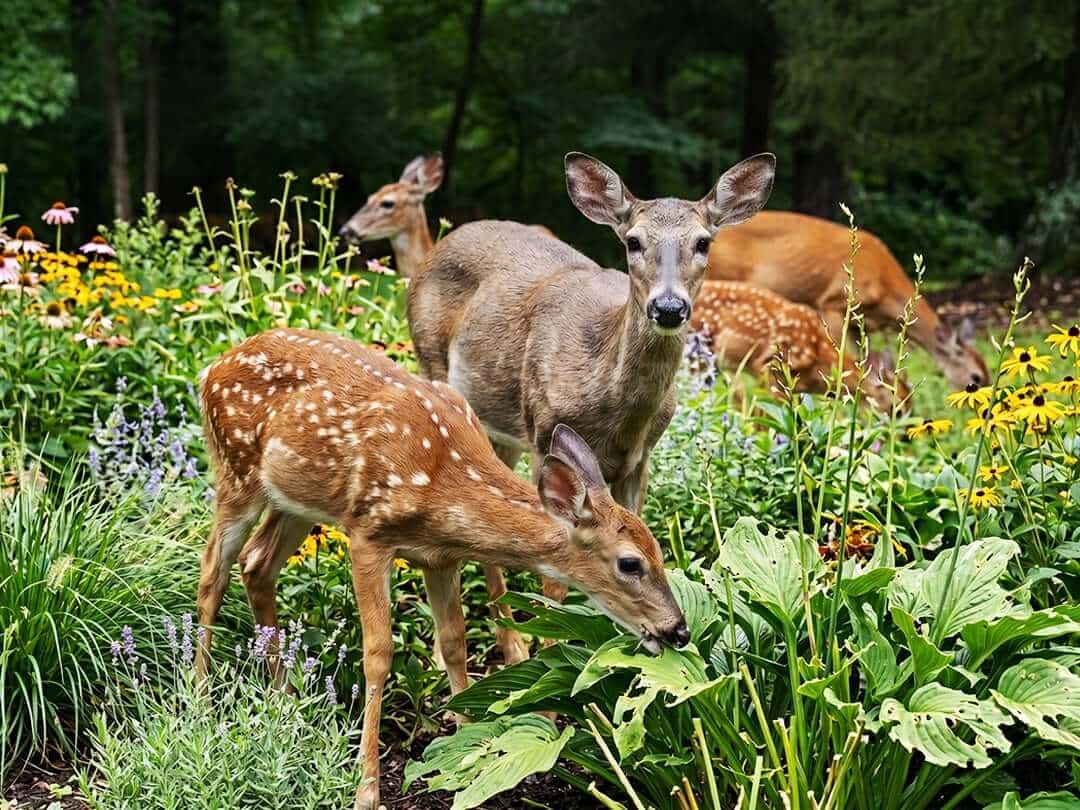
Deer are beautiful animals, until they eat your garden down to the stems overnight. If you’ve ever walked outside to find your carefully tended plants stripped bare, you know the frustration. The good news is that protecting your landscape doesn’t have to come at the expense of the wildlife around you. Sustainable deer control is about using methods that work over the long term while remaining humane and environmentally responsible.
It sits alongside other eco-conscious practices—like planting a pollinator-friendly garden—as part of a broader approach to landscaping that supports biodiversity while still protecting what you grow. The goal is to discourage deer rather than harming them, and to reduce their impact without disrupting the broader ecosystem. So, what actually works? Let’s break it down.
Physical Barriers and Exclusion Methods
Trying to change deer behavior can be an uphill battle. Deer are adaptable, hungry, and persistent. The most reliable approach is simply keeping them out—and that’s exactly what physical barriers do.
Deer Fencing
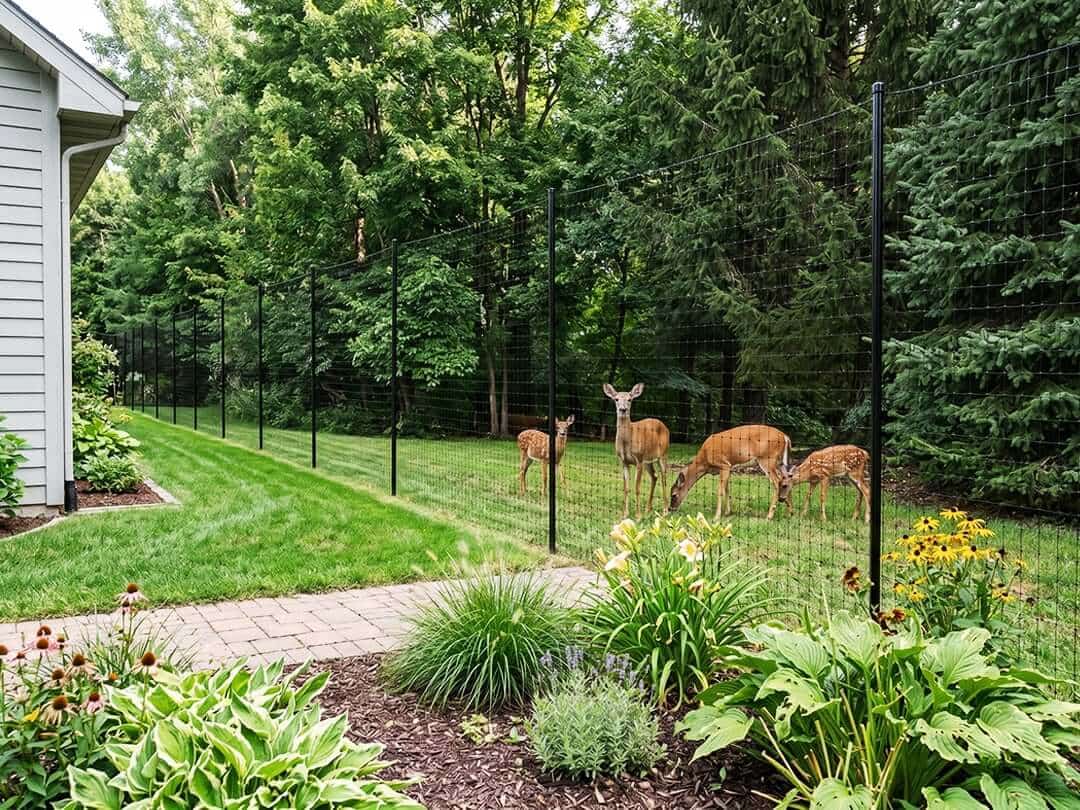
Deer fencing is one of the most effective tools available for homeowners and gardeners. The concept is straightforward. Build a barrier tall enough and sturdy enough, and deer simply can’t get in. Height matters a great deal here. Deer are impressive jumpers, so a fence that’s too short is barely a hurdle. You want a fence that stands at least seven to eight feet tall to give yourself a real line of defense.
Design matters, too. Polypropylene deer fence kits are popular because they’re lightweight, durable, and far less visible than traditional wooden or chain-link options. That visibility factor is important if you care about your yard’s appearance.
Deer fencing works best in gardens, larger properties, and areas with high deer pressure. If deer regularly visit your property, fencing is less of a luxury and more of a necessity.
Individual Plant Protection
Not every solution calls for a full perimeter fence. For small gardens or young trees that need protection during their early years, options like plastic netting, wire cages, and tree guards can do the job.
These solutions are affordable and easy to install. The downside is they’re labor-intensive to maintain, and they don’t scale well. Protecting ten plants with individual cages is manageable. Protecting a hundred is a different story. Think of individual plant protection as a targeted tool for a specific situation, not a whole-property strategy.
Landscaping and Habitat Modification
Changing what grows in your yard — and how your yard is arranged— can meaningfully influence deer behavior by making the space less appealing and less accessible. Deer are creatures of habit, drawn to tender, easy-to-reach plants and open pathways. By choosing deer-resistant species, layering plantings, and reducing clear lines of entry, you make your yard feel less like an open buffet and more like a space that requires effort and uncertainty to navigate. This approach works best as a complement to physical barriers, not a replacement for them.
Deer-Resistant Plants
“Deer resistant” is an important phrase to understand. It does not mean deer-proof. It means deer are less likely to eat those plants, especially when other food sources like grass, shrubs, and garden vegetables are available. However, stressed or very hungry deer will eat plants they’d normally avoid.
Deer also tend to avoid plants that are strongly aromatic, fuzzy-textured, or toxic. Lavender, yarrow, catmint, and Russian sage are popular examples. Planting these strategically, especially around the edges of your property, can make your yard a less attractive target.
Reducing Attractants in Your Landscape
Deer go where the food is. It sounds obvious, but many homeowners unknowingly create ideal conditions for deer without realizing it. Fruit trees, vegetable gardens, and even accessible compost bins are magnets for hungry wildlife.
To make your garden less attractive to deer, it’s best to:
- Pick up fallen fruit regularly.
- Secure compost bins with lids.
- Reduce dense shrub cover near garden beds, since deer feel safer feeding when they have places to retreat quickly.
None of these changes will eliminate deer pressure on their own, but together they can reduce how often deer choose your yard over a neighbor’s. Furthermore, consistency is key. Letting things slide, even for a week, enables deer to discover your yard and establish a routine.
Repellents and Deterrents
Repellents and deterrents have their place, but it’s important to go in with realistic expectations. They work best as short-term or supplemental strategies. Products like predator urine can tap into deer’s instinct to avoid hunger. But results vary depending on weather conditions, deer population density, and how quickly local deer adapt.
DIY Repellents
Homemade repellents are popular, budget-friendly, and easy to make. Common recipes use garlic, eggs, or soap-based solutions. They work by making plants smell or taste unpleasant, which is a reasonable approach in theory. In practice, they need to be reapplied frequently, especially after rain, and effectiveness tends to drop off over time as deer get used to the smell.
DIY repellents can be a useful tool when deer pressure is low or seasonal. Relying on them as your primary defense in a high-pressure area, though, is a recipe for disappointment.
Motion-Activated Deterrents
Motion-activated sprinklers, lights, and noise devices offer a more dynamic approach. When a deer triggers the sensor, a sudden burst of water, a flash of light, or an unexpected sound startles it and interrupts feeding behavior. This can be surprisingly effective at first.
However, initial success often doesn’t last, and the problem is usually habituation. Deer are smart, and over time, many learn that the sprinkler doesn’t actually hurt them and they start ignoring it. Rotating deterrents, changing their location, or combining them with other methods can extend their usefulness. Even so, these tools work best as part of a larger strategy — not as standalone solutions.

Why Deer Fencing Is the Most Sustainable Long-Term Solution
When you weigh all the options, deer fencing stands apart. It’s not a perfect solution for every situation, but for consistent, long-term protection, nothing else comes close. While other methods rely on behavior, which can change over time, fencing removes uncertainty by creating a clear, physical boundary. For gardeners who want a dependable, low-maintenance solution, it offers a level of control that’s difficult to replicate with any other approach.
Consistent, Reliable Protection
Every other method on this list has a significant limitation: it tries to influence deer behavior. Deer fencing doesn’t bother with any of that. It physically prevents access, which makes it far more predictable. Metal deer fencing, for instance, is built to withstand years of pressure, from deer to the elements, without breaking down or losing effectiveness. Once installed correctly at the proper height, it works continuously, day and night, without needing constant adjustment or reapplication.
Environmental and Ethical Advantages
Compared to chemical deterrents or population control measures, deer fencing has a minimal footprint on the local ecosystem. It doesn’t introduce foreign substances into your garden or surrounding soil, and it poses no risk to pollinators, pets, or other wildlife. This makes it a strong fit for gardeners who prioritize ecological balance and low-impact practices. In that sense, fencing supports a sustainable approach by protecting your space without disrupting the broader environment.
Cost Efficiency
Fencing does require an upfront investment, which can feel significant at first. However, when compared to the ongoing costs of repellents, plant replacement, and repeated maintenance, it often proves more economical over time. A quality deer fence, properly installed, can last a decade or more. That’s a one-time investment with lasting returns as opposed to an ongoing expense.
The Buck Stops Here
Protecting your landscape from deer doesn’t have to be a constant battle. The most effective approach combines a strong physical barrier with smart landscaping choices and targeted use of repellents when needed. A well-installed, high-quality deer fence can last a decade or more with minimal upkeep. And if you’re ready to invest in a solution that actually holds up over time, DeerBusters has the deer fencing options to match your property, your budget, and your goals.
FAQs
What Is the Most Effective Sustainable Deer Control Method?
The most effective sustainable deer control method is physical exclusion, particularly deer fencing. Unlike repellents or deterrents that rely on changing behavior, fencing prevents deer from accessing protected areas entirely. When properly installed at the correct height, it offers consistent, long-term results with minimal environmental impact.
Is Deer Fencing Humane?
Yes, deer fencing is considered one of the most humane deer control methods. It does not harm deer but instead creates a barrier that redirects their movement away from protected areas. This allows you to protect your landscape while supporting ethical wildlife management practices.
How Tall Should Deer Fencing Be?
Deer fencing should typically be at least seven to eight feet tall to prevent deer from jumping over it. In some cases, electric fencing systems with multiple wires can achieve similar results by creating a psychological barrier. The correct height and design depend on deer pressure and property layout.
Do Repellents Actually Work?
Repellents can work temporarily by making plants less appealing through taste or smell. However, they require frequent reapplication and often lose effectiveness over time, especially after rain or as deer become accustomed to them. They can be a supplemental strategy rather than a primary solution.