Best States for Homesteading
As grocery prices rise, many Americans are looking for a new way to save money — and finding it right in their backyard. Homesteading is on the rise, fueled by social media hype and practical appeal. Growing your own food can offset high grocery bills, but some states are more amenable to homesteading than others. Even if you have the motivation to till the soil and water your plants every day, high prices and low availability can dash your dreams of a family farm.
To better understand where homesteading is most realistic, DeerBusters collected and analyzed data on land cost, availability, climate, and search interest across the United States. By combining these factors into a composite score, we were able to quantify what makes a state accessible to homesteading.
Key Takeaways
Texas, Montana, Wyoming, Vermont, and North Dakota are the best states for homesteading, based on a combination of land cost, availability, and climate.
Hawaii, Rhode Island, and Alaska are the least favorable states for homesteading, with limited land availability and lower overall scores.
Texas has the most farms and ranches for sale in the country, with 8,367 listings, far ahead of Arizona (1,543) and Oklahoma (1,438).
Farmland is cheapest in New Mexico at $725 per acre, while Rhode Island is the most expensive at $22,500 per acre.
Montana, Wyoming, and North Dakota have the most land available per person, each offering roughly 45 to 50 acres per resident.
Ohio and Illinois have the most balanced growing conditions, with annual precipitation closest to the 40-inch benchmark used in the analysis.
Vermont has the highest interest in homesteading, based on Google Trends data, followed by Montana and Oregon.
Nevada has the driest conditions in the country, with just 9.5 inches of rainfall, while still ranking among the more affordable states for farmland at $1,200 per acre.
Where Homesteading Is Most Accessible Across the U.S.
In some states, you can find houses with sprawling yards and perfect soil within a few miles of a farm supply store. In others, you may not even be able to afford a house with a backyard. Some states get enough rain to grow all your fruits and vegetables for the year, while others require irrigation and water stores just to keep flowers alive. While determined homesteaders can settle down wherever they like, these states make it a little easier to break ground.
Everything is bigger in Texas, and that includes the potential for homesteading. With a top score of 66.8, the Lone Star State led in affordability, land availability, and acreage per capita, while also offering the most farmland for sale. For homesteaders, that means lower upfront costs, more options when buying, and the ability to scale operations over time.
Montana (62.7) and Wyoming (60.4) followed closely behind, both excelling in affordable land and acreage per capita. Montana stood out for its strong community of homesteaders, while Wyoming was one of the most affordable states overall. Together, these states provide the kind of flexibility and support that make long-term homesteading more realistic.
Vermont (59.3) and North Dakota (58.1) rounded out the top five. Vermont’s favorable climate helps reduce risk for crops and livestock, while North Dakota’s high acreage per capita means less competition for land and more room to grow. These states show that both environmental conditions and land access play a role in homesteading success.
Finishing out the top ten were South Dakota (57.9), Oklahoma (52.7), Kansas (48.7), Missouri (47.9), and Nebraska (47.1). South Dakota stood out for affordability and acreage per capita, though limited availability makes for more competition. Oklahoma and Missouri benefited from strong climate conditions and farmland access, but lower acreage per capita made expansion more difficult. Overall, these states offered solid foundations for homesteading, with some trade-offs in scalability and land availability.
States Facing the Steepest Barriers to Homesteading
Homesteading can be time-intensive and costly, but in some states, it’s nearly impossible. Rural farm land prices hit an all-time high in 2024, and in some states, they’ve only gotten more expensive. Even if these states have perfect climate conditions for a farm, most homesteaders are priced out of their dreams.
This time, “aloha” means goodbye instead of hello: Hawaii came in last with a score of just 7.6. The state lacked available farmland and the right climate to successfully grow common crops, along with a very low acreage per capita.
Rhode Island (14.8), New Jersey (20.1), and Massachusetts (22.3) highlighted how limited land supply and high population density severely constrain homesteading. While Rhode Island benefits from a more favorable farming climate than Hawaii, near-zero acreage per capita makes both finding and affording land extremely difficult. New Jersey and Massachusetts face similar pressures, with .5 and 0 acres per capita, respectively. In all three states, scarcity makes it nearly impossible to secure enough land for a functional, scalable homestead.
Alaska, with a score of 19.5, had very little suitable farmland despite its size. It also had zero active listings for farmland at the time of data collection, showing that many aren’t starting their farms on Alaskan soil…or ice.
California (23.5) falls just outside the bottom five, due to both the high cost of land and a lack of available farmland. Though the Golden State had more listings (and more land) than its low-ranking counterparts, the land is expensive, and buying is competitive. These states illustrate a consistent pattern: when land is scarce, expensive, or difficult to access, homesteading becomes unattainable.
How Farmland Costs Vary Across the Country
The cost of farmland varies dramatically across the U.S. Families who can afford to settle down in the Midwest may not be able to afford the same amount of land in New England. By comparing USDA land value data, we found which states are actually accessible to new buyers, and which ones are pricing them out.
Western states dominated the affordable end of the spectrum. New Mexico offered the lowest average farmland cost at just $725 per acre, followed by Wyoming ($1,000), Nevada ($1,200), and Montana ($1,230). These lower prices make it possible to purchase larger plots of land, which is essential for homesteaders planning to raise livestock, grow crops, or build self-sustaining systems. Colorado ($2,290), Texas ($2,970), and Kansas ($3,100) were relatively affordable, allowing homesteaders to build their farms without being far from major cities.
Coastal and densely populated states had a much higher barrier to entry. California farmland averaged $13,700 per acre, while Massachusetts ($14,900), New Jersey ($16,600), and Rhode Island ($22,500) topped the list of most expensive markets. In these states, high land costs significantly limit how much acreage buyers can afford, often forcing homesteaders to scale down their plans or even consider moving altogether. Purchasing property is extremely difficult in these states, forcing even longtime residents to choose between their homestead and hometown.
Where Land Is Most Available to Homesteaders
Getting land isn’t just about what it costs. It’s about whether you can actually find it, and how hard you have to compete to buy it. States with more available land make it easier to find a home that suits the needs of your family and homestead. We researched acreage per person, total farmland, active listings, and farm counts to learn where homesteaders have real room to grow.
States in the Great Plains and Mountain West led in acreage per capita, meaning there is significantly more land available per resident. Montana (50.2 acres per capita), Wyoming (49.4), North Dakota (48.8), and South Dakota (45.9) offered some of the least competition for land in the country. Nebraska (22.2) rounded out the top ten list partly due to its acreage per capita, and partly because the available land is affordable. These states provide the physical space needed for larger, more flexible homesteads without the competition you see in more densely populated states.
Total farmland showed where agriculture — and by extension, homesteading — was most established. Texas stood out with 125 million acres of farmland and 229,000 farms, proving its well-developed agricultural ecosystem. Farmland in Montana (56 million acres) and North Dakota (37.3 million acres) supports everything from small-scale homesteads to industrial farms.
The number of existing farms in a state reflects how embedded agriculture is within the local economy and culture. The high number of farms in states like Iowa (86,200 farms) and Missouri (85,500 farms) indicates that they have established infrastructure to support agriculture. As your homestead grows, you’ll need access to things like supply stores, livestock veterinarians, and machine repair — all of these things are easier to find in states with existing farm networks.
Of course, those farms have to actually be for sale. We checked active listings to get a real-time view of how much land is actually available to new buyers. Texas again led the pack with 8,367 listings at the time of data collection. Arizona (1,543), Oklahoma (1,438), and Missouri (1,280) also show healthy inventory levels, which can reduce competition and allow buyers to be more selective.
Where there’s more land and more farms, it’s easier to get started. Buyers have more options, face less competition, and have a better shot at building something that can actually grow over time.
Climate Conditions Across Key Growing Regions
Homesteaders can have a tense relationship with rain. Not enough rain, and their water bills skyrocket to keep their plants alive. Too much rain leaves crops vulnerable to root rot and fungal diseases. This is why finding a state that hits the “sweet spot” is at the top of many homesteaders’ priority lists.
Ohio (39.7 inches), Illinois (39.2 inches), and Washington (38.4 inches) had near-ideal precipitation levels, supporting growing conditions without excessive runoff or drought risk. A little extra rain can be a boon for homesteaders as well. New York (41.8 inches), Maine (42.2 inches), Missouri (42.2 inches), and Vermont (42.7 inches) had slightly above-average rainfall that benefits crop yields while still being manageable for most homesteading setups.
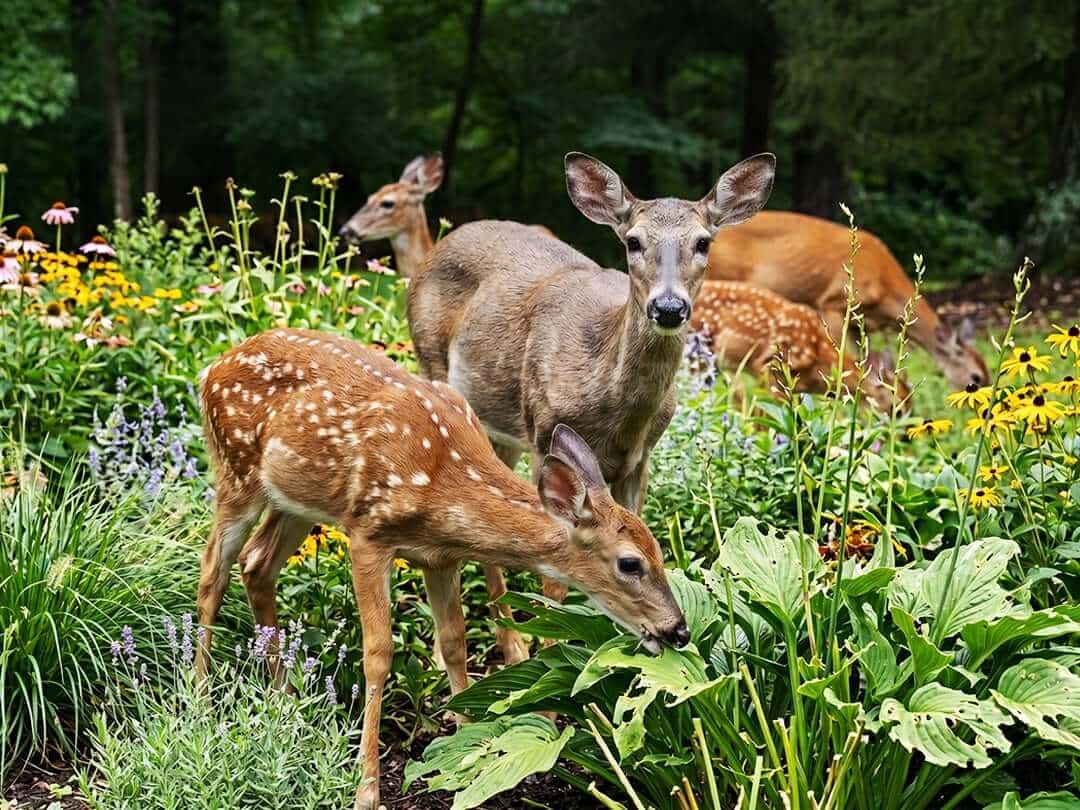
Rain and climate also influence the nearby wildlife. In states where farmland edges up to forests, homesteaders have to worry about deer, raccoons, and other pests finding their way into the garden. These critters can cause hundreds, if not thousands, of dollars in damage, which can significantly impact the lifestyles of homesteaders. Climates that support homesteads also naturally support local wildlife, and homesteaders in these states have to find solutions to keep these animals away from their crops.
States with extremely low precipitation can be difficult to start a homestead in. Wyoming (12.9 inches) and Utah (13.2 inches) receive minimal rainfall, while Nevada ranks lowest at just 9.5 inches annually. In these regions, homesteaders must become familiar with irrigation systems, water storage solutions, or drought-resistant crops to maintain productivity.
Living in a low-rainfall state doesn’t make it impossible to start a homestead, but it does mean you’ll have to think creatively. For many, setting up an irrigation system is worth it to save money on good land, as long as they’ve built it into the budget. An irrigation system can cost up to $4,000 per acre, so families who want to build their homestead in the desert states should prepare for some serious renovations. These homesteaders also aren’t immune from wildlife either: desert ecosystems have their own pests to contend with, as well.
Where Interest in Homesteading Is Highest
To learn which states have established homesteading communities — as well as homestead hopefuls — we analyzed Google Trends data to see which states people want to settle down in. This search data reflected both those looking to relocate to these states and residents looking to build up their backyards. These are the states with the most established interest in homesteading, and why they top the charts.
There’s clear concentration in regions where homesteading is both culturally relevant and realistically attainable. Vermont (index 80), Montana (78), and Oregon (78) led in search interest, followed by Maine (75), Idaho (72), Tennessee (72), West Virginia (70), and Kentucky (70). Most of these states ranked highly overall, with some of them leading the country in categories like acreage per capita and affordable land.
This shows that interest builds in places where people can actually act on it, and often in the states they already live in. Planning your dream homestead is easier when you know you’ll have access to land that you can afford, and may even be able to stay near your family and friends.
On the opposite end, Rhode Island (index 25) and New Jersey (28) saw significantly lower search interest, which matches their overall rankings. This doesn’t necessarily mean that people aren’t interested in starting homesteads in these states. Instead, people are being realistic about it. Land is scarce and expensive in smaller, more urban states, and residents know it. Fewer people are searching for land around here because they know they can get more land for less money in other parts of the country.
What It Really Takes to Build a Sustainable Homestead
The highest-ranked states have clear advantages, but strong scores don’t guarantee homesteading success. Finding affordable land in a state you love is step one, but building a successful homestead is where the real work begins. Planting and rotating crops, raising livestock, and protecting your home from wildlife are daily tasks that keep your homestead running.
Once you’ve found your home, make sure you protect your investment. Once your garden is growing and your chickens are roaming the grounds, deer and rabbits will flock to your yard. Finding gentle but effective solutions will make your homesteading journey that much easier.
No matter where you decide to settle down, you can work with your state to create a thriving family homestead. Many states provide grants and loans to aspiring farmers, and a savvy homesteader can take advantage of tax credits for family farms. Even if the state you want to settle down in doesn’t top the list, you can still turn it into your home.
Methodology
We collected state-level data from USDA NASS (USDA NASS total farmland), NOAA NCEI, the U.S. Census Bureau, Google Trends, and LandWatch to determine which states offer the most practical conditions for homesteading. Key variables included farmland cost, number of farms and ranches for sale, acreage per capita, climate suitability, and search interest. The factors were weighted as such: Farmland Cost (30%), Farms and Ranches for Sale (25%), Acreage per Capita (25%), Climate Suitability (15%), Search Interest (5%).
Each factor was weighted and normalized on a 0–100 scale before being combined into a composite score for each state. Listings data reflects a snapshot in time, and some states were scored using partial data where necessary, with weights redistributed proportionally. This analysis focuses on measurable factors tied to land access and feasibility and does not account for zoning laws, regulations, or individual lifestyle preferences.
About DeerBusters
DeerBusters provides high-quality fencing solutions designed to protect gardens, crops, and land from deer and other wildlife. For homesteaders, reliable fencing is a key part of maintaining a productive and sustainable property, helping safeguard both time and financial investment.
Fair Use Statement
You may share this content for non-commercial purposes only, provided you include proper attribution and a link back to DeerBusters.