

Uninvited: The Diseases Wild Animals Are Bringing Into American Backyards
Table of Contents
Two-thirds of Americans consider their backyard safer than a public trail, even as ticks, rodents, and the diseases they carry turn up just outside the door.
Emergency rooms are seeing more tick bites this year than at any comparable point since 2017. The CDC reported that weekly ER visit rates for tick bites were running above normal in almost every region of the country. Most of those bites didn't happen on a mountain trail. They happened where people spend the most time outdoors – a few steps from their own back door, where local wildlife may be sneaking in.
To find out how Americans think about the animals around their homes, DeerBusters surveyed 1,000 U.S. adults with access to a private or shared outdoor space about what they've encountered outside, what they believe about how disease spreads, and what they actually do about it. The answers reveal a wide gap between what people worry about and what they act on – and a set of misconceptions steering entire households toward the wrong precautions.
Key Takeaways
- Two-thirds of Americans (67%) consider their own backyard safer from ticks and wildlife than a public park or hiking trail — yet 34% have found a tick on themselves, and 38% on a pet, after time in that "safer" space.
- Nearly half of Americans (48%) wrongly believe mosquitoes spread Lyme disease, and 30% believe deer transmit Lyme disease to people directly. The real culprit is the blacklegged tick, the one most people call a deer tick, which means plenty of families are guarding against the wrong thing.
- Only 1 in 6 Americans (17%) feel very confident they could identify which backyard animals carry disease risks, even though 42% have seen deer, 37% have seen mice or rats, and 35% have seen raccoons on their property in the past year.
- Nearly 1 in 4 Americans (25%) have taken no action at all to protect against ticks around their home, and only 17% check their yard for ticks every time before children or pets use it.
- Protecting a pet is nearly twice as motivating as protecting a child. Among people who added a wildlife or tick-control measure, 19% did it for a pet, compared to just 10% who did it for a child or another household member.
- 16% of Americans have swept or vacuumed up rodent droppings, which can stir hantavirus, a rare but serious rodent-borne virus, into the air. Just 9% disinfected the mess first.
- Cost is the single biggest barrier to better protection, with 31% citing the cost of fencing, barriers, or professional services as the top reason they haven't done more. In comparison, 22% say renting or a lack of property control holds them back.
Americans Trust Their Yard More Than the Trail
Risk, in many people's heads, lives outside the property line. Before a hike, they spray their ankles and tuck their socks into their boots. But these same people will walk into their backyard barefoot without a second thought. While the same critters you encounter on a hike can just as easily live in your backyard, Americans largely dismiss these worries.
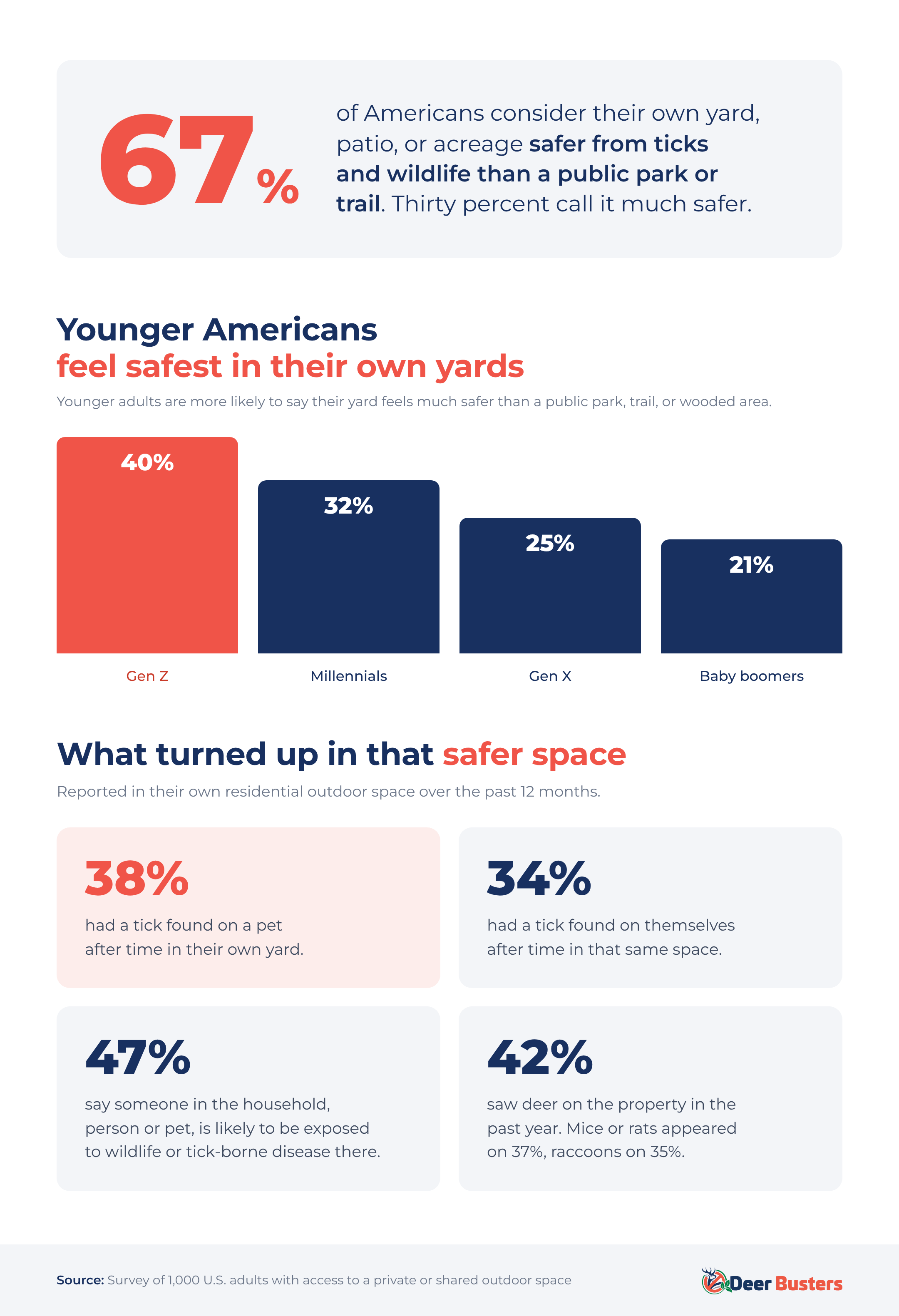
Most Americans have outdoor space of their own: 74% reported access to a private yard, 69% a patio, deck, or terrace, and 15% residential acreage. Two-thirds (67%) rated that space safer than a public park or trail – 30% called it "much safer," another 37% "somewhat safer." But in practice, that isn’t always true.
In the past 12 months, 34% of respondents had a tick found on themselves in their own yard. Another 47% said someone in their household, person or pet, was likely to be exposed to wildlife or tick-borne disease through that space. People recognize the inherent risk of outdoor spaces, but believe their yards are exceptions, even when the evidence has already latched onto a loved one.
Gen Z was the most confident, with 40% calling their outdoor space "much safer" than a park or trail, against 32% of millennials, 25% of Gen X, and 21% of baby boomers. Men show the same disconnect. They rated their outdoor space safer at 73%, against 62% of women. However, they also reported more tick encounters, with 40% having had a tick found on them in the past year, compared to 28% of women. This sense of security gives men a higher risk tolerance – one that could lead to them contracting an irreversible disease.
These people are familiar with the wildlife that comes through their yards, even if they consider them safe. Deer turned up on 42% of properties in the past year. Mice or rats appeared on 37%, raccoons on 35%. Even when people didn’t see the responsible animal, 43% found droppings and 34% found nests or nesting material. A third (33%) found chewed or dug-up landscaping, and 21% found a dead animal or animal remains. Wild animals are regular visitors, whether or not anyone is home to see them.
What Americans Get Wrong About Wildlife-Borne Disease
Some backyard diseases are household names. Others, most people have never heard of, even if the animals carrying them are regular visitors. That gap in knowledge shapes how a family responds to a raccoon on the deck or a mouse nest in the shed, and whether or not they know that either one could carry disease.
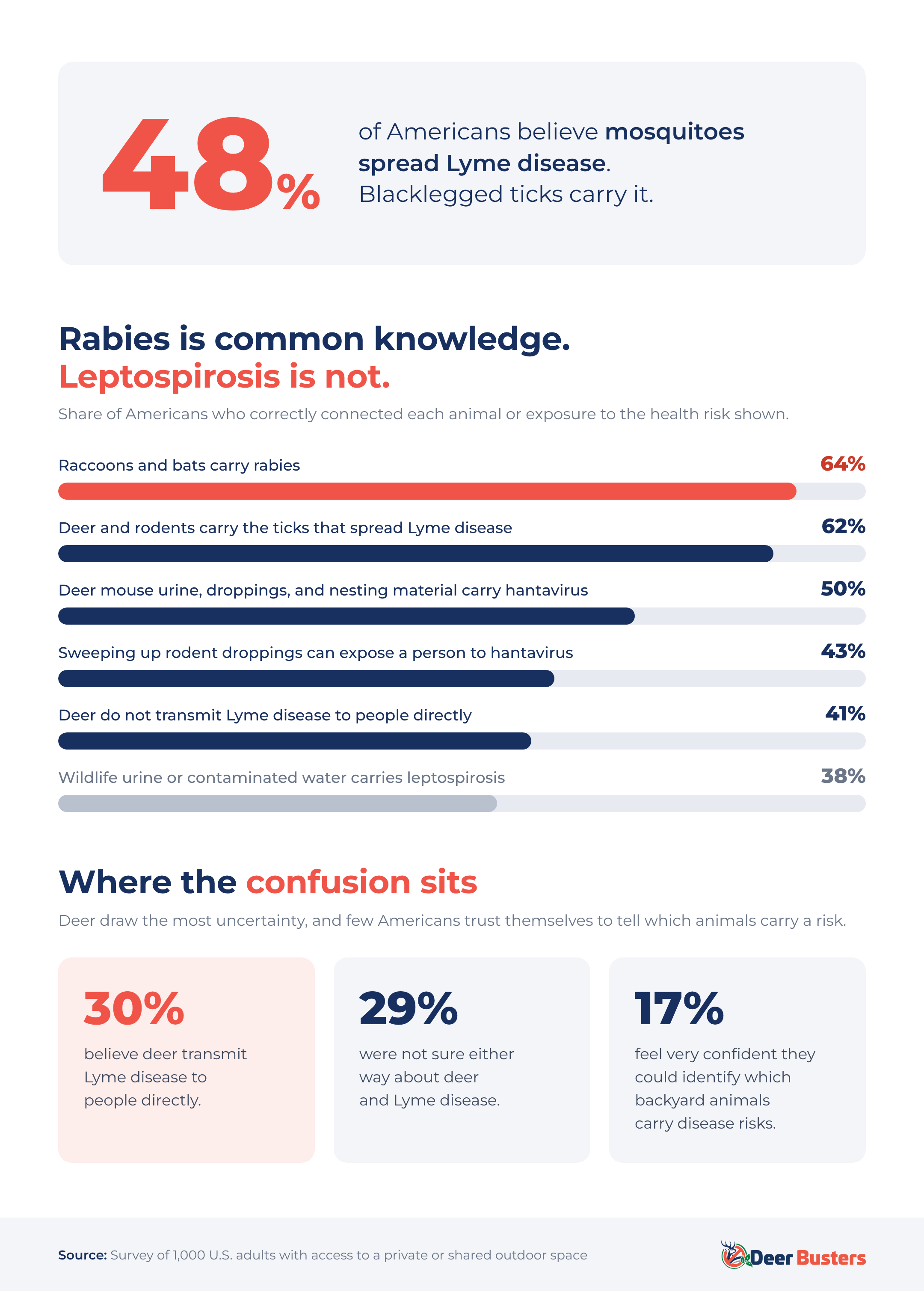
Nearly half of respondents (48%) said mosquitoes spread Lyme disease. They don't. The CDC finds no credible evidence that mosquito bites transmit the bacteria. Bacteria can be carried by some garden pests, like the blacklegged tick, however.
Americans were similarly confused by deer. Only 41% correctly identified that deer do not directly transmit Lyme disease to people, while 30% believed they do, and 29% weren't sure. Americans did get one thing right about deer, though: when asked which animals carry the ticks that spread Lyme, 62% correctly named deer and rodents.
However, people were more evenly informed about other transmissible diseases. Nearly two-thirds (64%) correctly associated raccoons and bats with rabies, making it the most well-known method of transmission. Half (50%) correctly linked deer mouse urine, droppings, and nesting material to hantavirus, and 43% knew that sweeping up rodent droppings could expose them to hantavirus. Leptospirosis — a bacterial infection dogs pick up from contaminated water — landed at the bottom: 38% connected wildlife urine or contaminated water to the illness. Public health agencies have run rabies campaigns for generations. Nobody has done the same for leptospirosis, and that’s why we’re seeing such a wide familiarity gap.
Only 17% of Americans felt very confident identifying disease-carrying backyard animals, against 24% who were "not very confident" and 7% "not at all confident." Certainty ran highest among the youngest respondents – 22% of Gen Z and 23% of millennials felt very confident, compared with 9% of Gen X and 11% of baby boomers. Boomers were the most accurate group tested: 68% correctly connected deer and rodents to Lyme disease, against 55% of Gen Z. Confidence is the more dangerous variable here. A more cautious person will look something up before clearing a nest or letting a dog into the brush. Someone who believes there’s no reason to worry won’t do the same.
Ticks, Kids, and Pets
Parents build routines around risks they can see. They apply sunscreen before the pool and buckle helmets before the kids ride their bikes. But preventing a tick bite is harder, and if parents skip the tick check even once, they could miss a potentially life-changing bite. We asked households what they do to keep their kids and pets safe from ticks.
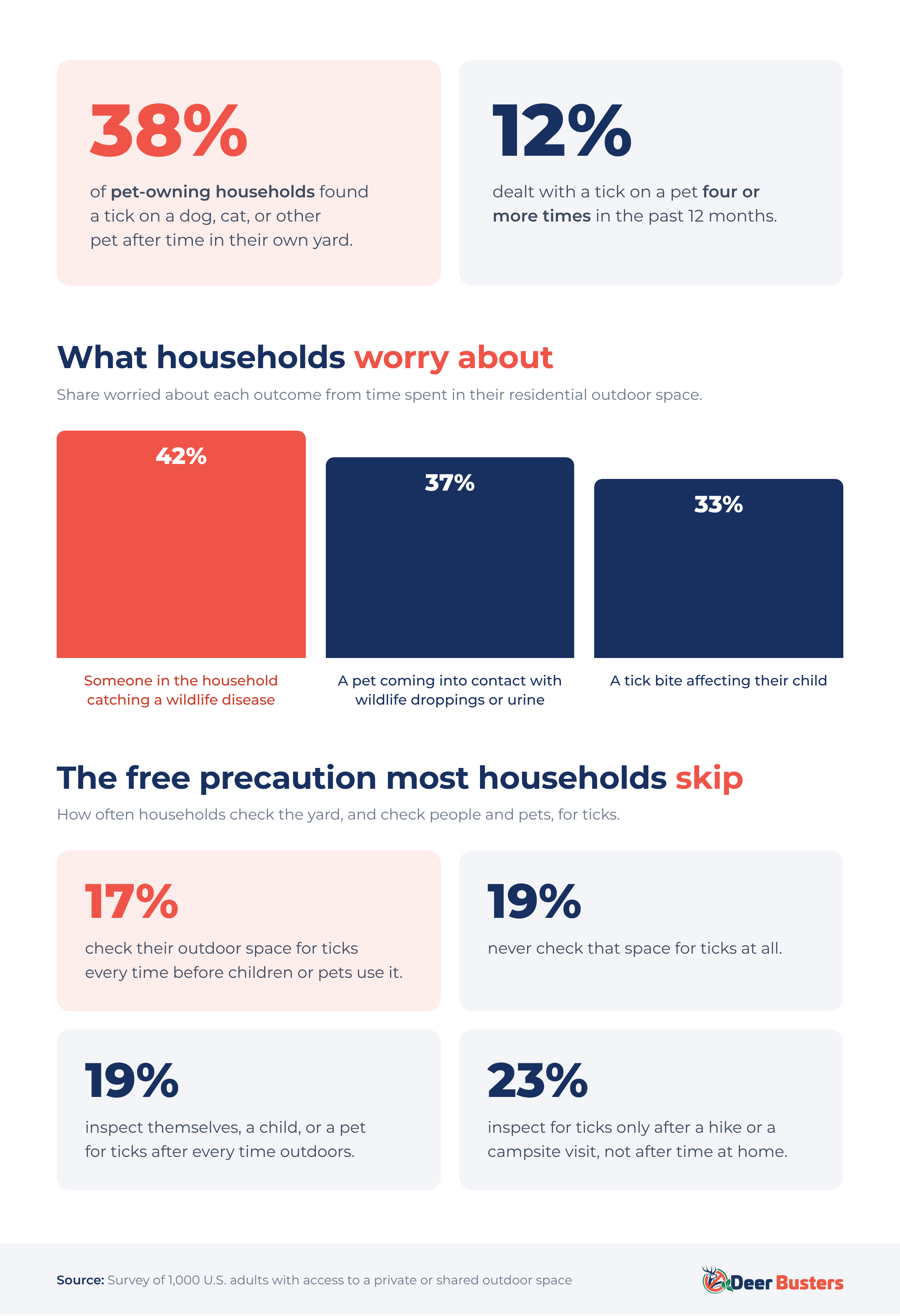
Pets bring home more ticks than anyone else in the household. Among pet-owning households, 38% had found a tick on a dog, cat, or other pet after time in their own yard, and 12% had dealt with it four or more times. Dogs and cats are lower to the ground, brushing against the grasses that ticks call home. Their fur makes it easier for ticks to take hold and hides the little arachnids once they bite.
People know the risk their family faces, even in their own yards. Two in five (42%) were worried that someone under their roof could catch a wildlife- or tick-borne disease. Slightly fewer (37%) were worried about their pets coming in contact with wildlife droppings or urine, and possibly contracting a disease from the encounter. Another third (33%) worried about a tick bite affecting their child. These people know that even one bite can cause an emergency.
But that worry doesn’t always make people change their habits. Only 17% checked their outdoor space for ticks every time before children or pets went out, and 19% never did. The same goes for the other safety checks: 15% looked for standing water every time, and 15% checked for wild animals before letting their pets or kids play outside. Checking their kids and pets after they go outside is even more important. Still, only one-fifth (19%) of respondents said they inspect themselves, a child, or a pet for ticks after every time they go outdoors, while another 23% do so every time they hike or visit a campsite.
Women carried more of the worry: 18% were very worried about a child getting a tick bite, against 12% of men. Another 23% of women were very worried about a household member getting sick, but only 18% of men said the same. For some, that concern didn't translate into different behavior – 24% of women and 26% of men had made no purposeful moves to protect against ticks.
What moves a household to act is often the dog. Among people who added a wildlife or tick-control measure to their yards, 19% did it to protect a pet, while 10% did it for a child or another household member. But the preventative measure most households are skipping costs nothing at all: looking at the yard before anyone goes out, and checking everyone who comes back in.
The Quiet Hantavirus Risk
Most Americans first became familiar with hantavirus in May 2026, when there was an outbreak on a cruise ship in the Atlantic. While no cases reached the United States, it prompted many to learn about the deadly virus and how it can find its way into their own homes. But the strain that already lives in American sheds and crawlspaces spreads a quieter way, and you don’t need to be on a cruise ship to encounter it.
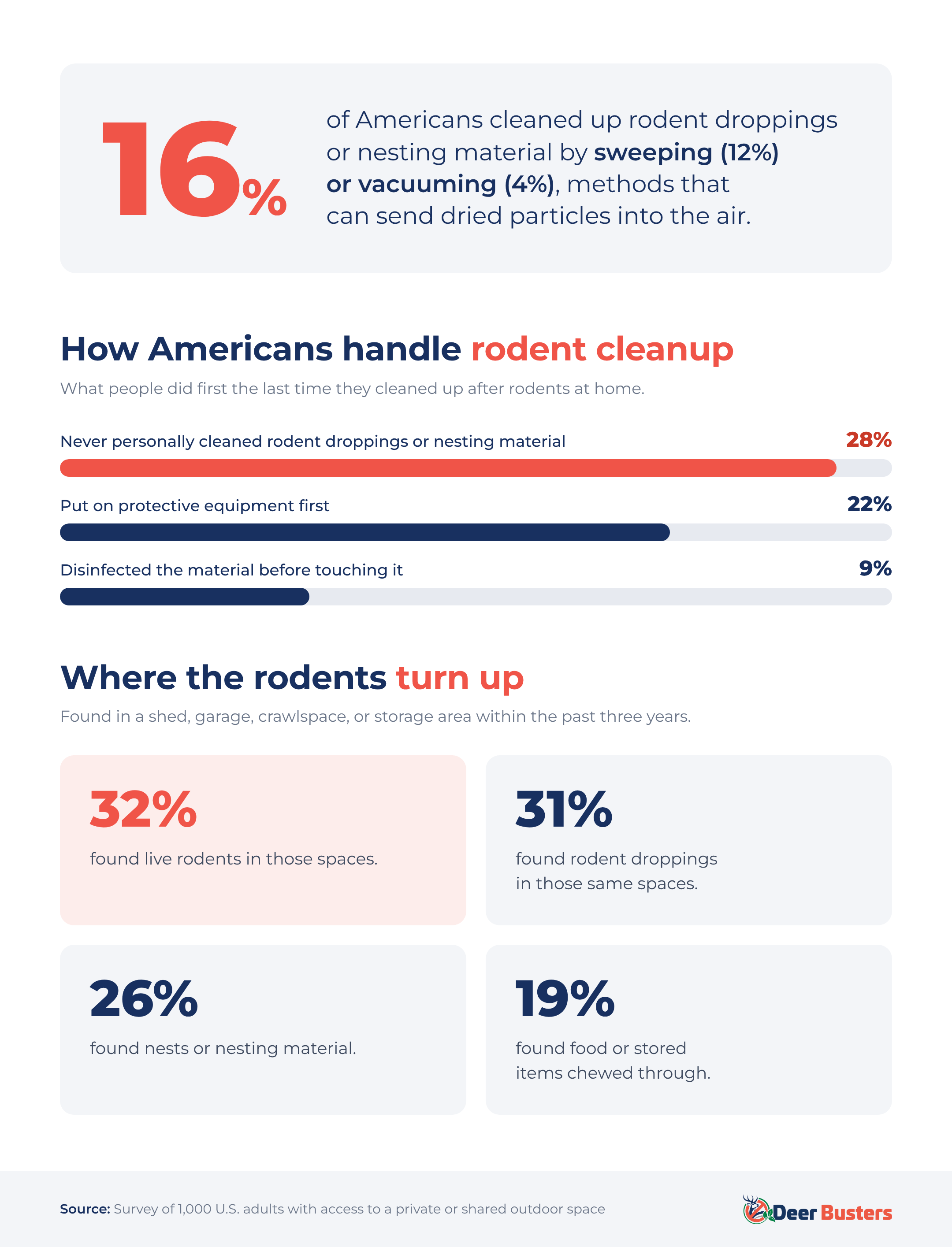
Rodents are a common find in storage spaces. Nearly a third of respondents (32%) had found live rodents in a shed, garage, crawlspace, or storage area within the past three years, and 31% had found droppings in those same spaces. Another 26% had found nests or nesting material, while 19% had found food or stored items chewed through.
Those droppings are easy to overlook. Mouse droppings are small, dark, and about the size of a grain of rice, and in a dusty corner of the garage they can pass for dirt or debris. Deer mice, the main carrier of hantavirus in the U.S., leave the same kind behind as a common house mouse, so there's no telling by sight which ones are dangerous. The safe assumption is that any of them could be.
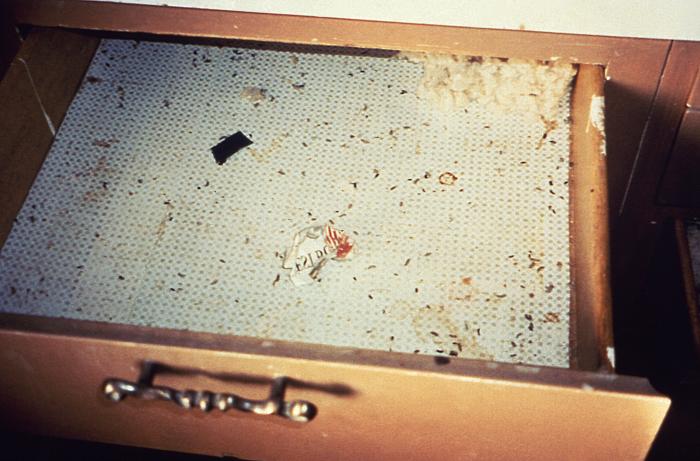
But cleaning them up the wrong way creates more risk, as the dried droppings can still carry hantavirus. About one in six (16%) cleaned up droppings or nesting material by sweeping (12%) or vacuuming (4%), two methods that can send those particles into the air. When asked about the most recent time they cleaned up rodent droppings, only 22% had put on protective equipment first, and just 9% had disinfected the material before touching it. Hantavirus is not a common infection, but it is a serious one: CDC data show roughly 35% of reported U.S. cases have been fatal. The safer way is to spray the droppings with disinfectant, let them soak for a few minutes, and wipe them up with paper towels.
Just over a quarter of respondents (28%) had never personally cleaned rodent droppings or nesting material, which means the exposure affects whoever in the household does the job. That turned out to be the younger members of the household. Some 45% of baby boomers had never done it themselves, against 16% of Gen Z. Younger adults are cleaning up after rodents most often, putting the exposure on the people least likely to have done it before.
What's Stopping Better Protection
Prevention has a price list. A bottle of repellent runs a few dollars; a fence line runs into the thousands. Most households are choosing something in the middle so they can keep their yards safe without having to skip out on groceries. We asked what's keeping people from doing more to protect themselves, and cost was the most prevalent obstacle.
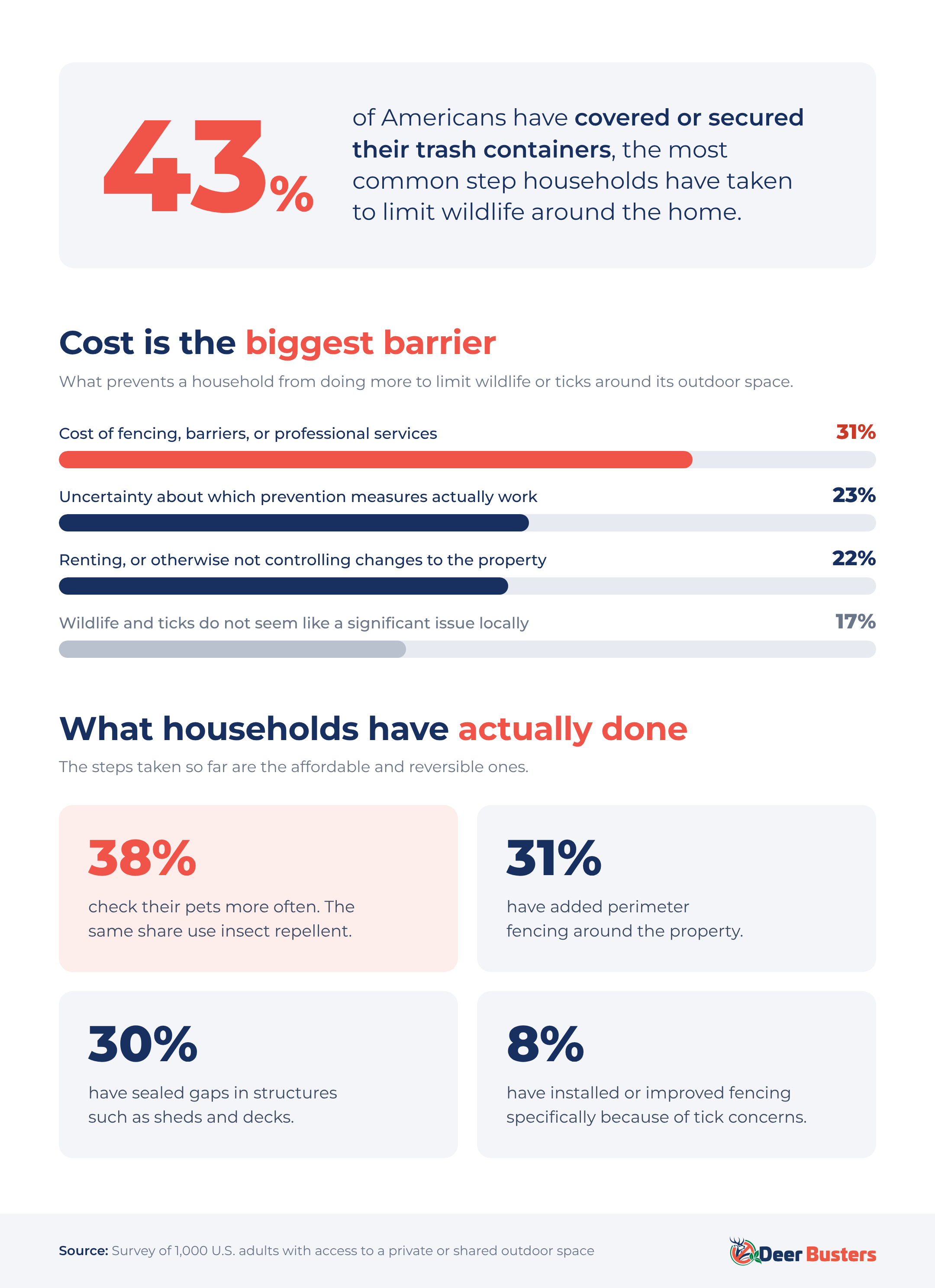
This is what comes between Americans and the safest backyard possible:
- Cost of fencing, barriers, or professional services (31%);
- Uncertainty about which prevention measures actually work (23%);
- Renting, or otherwise not controlling changes to the property (22%);
- Wildlife and ticks do not seem like a significant issue where they live (17%).
What people have already done tends to be affordable and reversible. Covering or securing trash containers led at 43%, followed by adding perimeter fencing at 31% and sealing gaps in structures at 30%. On ticks specifically, the two most common actions were checking pets more often (38%) and using insect repellent (38%). Only 8% had installed or improved fencing specifically for tick concerns.
Nearly one in five (18%) said they'd be very likely to invest in routine tick treatment, and 19% said the same of professional pest or wildlife-control services. Another 4% already have pest-control routines in place, illustrating a share of American households that do all they can to prevent the spread of these transmissible diseases.
Younger generations are prevented from making landscaping changes to their yards like adding fencing or permanent gardens, largely by their landlords: 31% of Gen Z and 24% of millennials named renting as a barrier, against 18% of Gen X and 12% of baby boomers. Cost follows the same slope, cited by 35% of Gen Z and 25% of boomers. Yet younger respondents are the more willing investors going forward — 23% of both Gen Z and millennials said they'd be very likely to put money into perimeter fencing, against 12% of boomers. Boomers are twice as likely to already have it, at 20% versus 8% of Gen Z.
The willingness to invest is concentrated in the households with the least authority to act on it. That may resolve on its own as younger renters become owners, but it leaves a sizable group protecting a property they can't modify.
A Safer Yard Starts With Knowing What's In It
Public health messaging about ticks was built for a country that encountered them on vacation. Wear long pants on the trail, check yourself after camping, spray down before the woods. All of it assumes the risk is somewhere you go, not where you live. That advice made sense when it was written. It makes less sense now, as deer populations settle into subdivisions and suburban lawns push further into what used to be edge habitat. It leaves the average homeowner without a mental category for the exposure sitting twenty feet from their kitchen door.
The gap that follows isn't a failure of individual attention. It's what happens when the guidance a person absorbs doesn't match the place they actually live. It falls hardest on households with the least control over their surroundings — renters who can't modify a property, families whose kids and animals spend the most time in the grass, and anyone who can't afford to buy their way out. Meanwhile, the measures that would close the gap are unglamorous and cheap. Nobody markets a routine.
People already worry about ticks and other wildlife; the worry is just aimed at the wrong side of the property line. Redirecting it doesn't require alarm or expense so much as a different default assumption about where the risk lives. That's a correction any household can make, regardless of whether they own the place.
Methodology
DeerBusters.com surveyed 1,000 U.S. adults with access to a private or shared outdoor space, including a yard, garden, patio, acreage, or residential green space. The survey examined knowledge of wildlife-borne diseases, encounters with animals and ticks around the home, perceived backyard safety, current prevention behaviors, and confidence in keeping wildlife away from high-use outdoor areas. Results were stratified and analyzed across demographic segments, including generation and gender. Percentages reflect self-reported data and may sum to more than 100% when multiple selections were allowed.
About Deerbusters
DeerBusters.com supplies deer fencing, garden enclosures, and wildlife-exclusion products for homeowners, gardeners, and property managers across the United States. Keeping deer, rodents, and other animals off a property is the most direct way to reduce the tick and wildlife exposure that reaches families and pets at home.
Fair Use Statement
You may share the findings on this page for non-commercial purposes only, provided you include proper attribution and a link back to this original research from DeerBusters.com.